


TOPIARY / Ficus microcarpa hillii 'Flash' (Clouds)
Plants travel upright in enclosed trucks - not general couriers.Learn more
Or plant one of these instead
This one is available today and does the same job in the garden.
Finish the job
Topiary Hills Weeping Fig (Clouds) / Topiary Ficus Flash (Clouds)
Botanical Name: Ficus microcarpa hillii 'Flash' (Clouds)
Family: Moraceae
Origin: EAstern Australia
Plant Type: Evergreen shrub/tree (trained as cloud-pruned topiary)
Overview
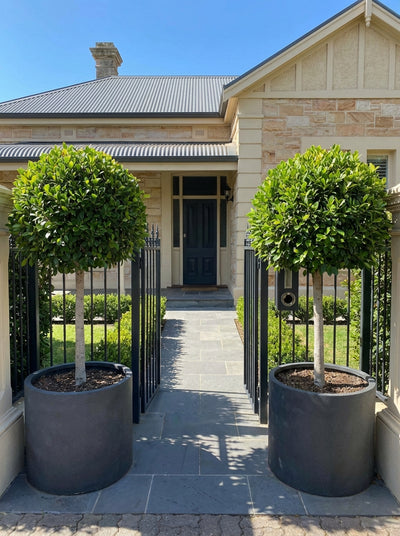
‘Flash’ shaped into cloud pads (niwaki style) gives instant sculptural drama for Adelaide gardens. Dense, glossy foliage sits on tiered branches you can “float” above a clean trunk, reading as living art year-round. It’s fast to establish, clips cleanly, handles heat and coastal wind, and makes a knockout feature in the ground or in big statement pots.
Key Features
- Mature Size: 1.8–3 m H × 1.2–2.5 m W as maintained topiary (unclipped trees can grow much larger)
- Growth Rate: 30-60 cm per year under good conditions
- Foliage: Bold, glossy mid- to deep-green leaves; naturally dense
- Flowers: Inconspicuous; occasional small figs if not clipped (usually minimal on maintained topiary)
- Seasonal Interest: Evergreen structure with repeated lime-green flushes after clipping
- Wildlife Value: Dense shelter for small birds; figs (if allowed) may attract fruit-eaters
- Tolerance: Drought & heat tolerant once established; wind & coastal tolerant; light frost hardy (protect young plants from hard frosts); copes with urban conditions. Strong roots—use a root barrier and allow space from pipes and paving
- Planting Density: Feature/specimen: 2.5–4 m from other trees/structures; Large pots: one per 55–70 cm container (heavy, well-weighted)
- Pet Friendly: No — mildly toxic/irritant to cats and dogs. The milky latex sap can irritate skin and mouths.
Where It Works Best
- Sunlight: Full sun to part shade (more sun = tighter pads & faster response after clipping)
- Soil: Well-drained loam or sandy loam; enrich clay and avoid waterlogging
- Water Needs: Establishment: 2 deep soaks/week for 8–12 weeks. Established: deep soak every 10–14 days in summer (more in heatwaves/containers); monthly in winter if dry
- Maintenance: Pinch/clip 4–8×/yr to define pads (little and often); a structural prune late winter to refine tiers; feed early spring (slow-release balanced fertiliser) and again mid-summer for potted specimens; rotate pots quarterly for even light; stake young trunks in windy sites
- Lifespan: 30–50+ years
- Climate Zones: Suited to temperate and Mediterranean SA gardens, including coastal areas
- Soil pH: Slightly acidic to mildly alkaline
Landscape & Design Ideas
- Signature cloud-pruned specimen for courtyards, entries and pool terraces
- Modern/Japanese palettes with gravel, stone and low groundcovers
- Large containers to frame doors or anchor outdoor rooms; uplight for night drama
Why You Will Love It
A living sculpture that thrives in Adelaide: glossy, evergreen pads, quick recovery after a clip, and year-round architectural impact. With simple, regular pinching, your Ficus Flash Cloud stays gallery-ready—no flowers to litter, just pure form and polish.