


Beschorneria yuccoides
Plants travel upright in enclosed trucks - not general couriers.Learn more
Or plant one of these instead
This one is available today and does the same job in the garden.
Finish the job
Mexican Lily
Botanical Name: Beschorneria yuccoides
Family: Asparagaceae
Origin: Mexico (Sierra Madre Oriental highlands)
Plant Type: Evergreen rosette-forming succulent perennial
Overview
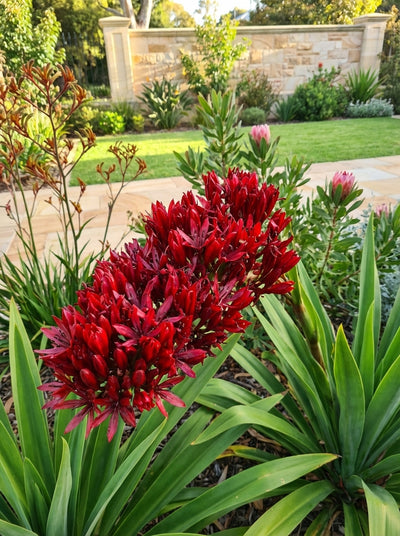
Beschorneria yuccoides, commonly known as Mexican Lily, is a bold architectural perennial that brings dramatic sculptural presence to South Australian gardens with minimal effort. Native to the rocky highlands of Mexico, it forms a dense rosette of soft, grey-green strap-like leaves and produces an extraordinary arching flower spike of coral-red bracts and nodding green-yellow tubular flowers — one of the most striking floral displays of any drought-tolerant plant. Exceptionally well-suited to Adelaide's hot, dry summers and cool winters, it thrives in coastal gardens, Hills properties, and dry inland landscapes alike.
Key Features
- Mature Size: 1.0–1.2 m H (foliage rosette) x 1.2–1.5 m W; flower spikes reach 1.5–2.0 m H in bloom
- Growth Rate: Moderate; 15–25 cm per year; clumping and slowly spreading via offsets, building into an increasingly impressive multi-rosette specimen over time
- Foliage: Soft, arching strap-like leaves to 60–80 cm long, grey-green with a subtle blue-grey bloom; edges finely toothed but tips soft — far less hazardous than true yuccas; forms a neat, dense rosette
- Flowers: Arching to pendulous flower spike bearing coral-red to deep pink bracts with nodding green-yellow tubular florets; non-fragrant; blooms late spring to early summer (October–December in Adelaide); spikes persist as ornamental features for weeks
- Seasonal Interest: Year-round structural foliage interest with a spectacular late-spring flowering event; spent rosettes slowly die back after flowering and are replaced by offsets, giving the clump an evolving multi-layered texture
- Wildlife Value: Tubular flowers attract nectar-feeding honeyeaters and silvereyes; also visited by bees and other native pollinators during the flowering period
- Tolerance: Drought-tolerant (once established, survives Adelaide summers on minimal supplemental water); frost hardy to approximately −8°C; heat-tolerant through extreme SA heatwaves; coastal-tolerant (handles salt-laden winds); wind-tolerant; tolerates poor, rocky, or sandy soils; accepts light to moderate clay soils with good drainage
- Planting Density: Feature specimen (single or paired): plant 1.5–2.0 m apart to allow full rosette development and unobstructed flowering spike display; mass planting or dry garden groundcover effect: 1.0–1.2 m apart (approx. 1 plant per m²) to achieve a connected, textural drift within 3–4 years
- Pet Friendly: Beschorneria yuccoides is considered low-toxicity and is not listed on major veterinary toxic plant databases; however the leaf tips, while softer than true yuccas, can still cause minor skin irritation or eye injury if pets (or children) run into them at pace — avoid planting directly alongside pet runs or high-traffic play areas. Consult your vet if ingestion of plant material occurs.
Where It Works Best
- Sunlight: Full sun preferred for best flowering and most compact rosette form; tolerates part shade (3–5 hours direct sun) though flowering may be reduced and foliage slightly more lax
- Soil: Prefers freely draining sandy loam or rocky soil; tolerates poor, gravelly, or sandy soils; avoid prolonged waterlogging; can manage in light clay provided the site drains after rain; add grit or coarse sand to heavy clay beds at planting
- Water Needs: Establishment (first 12–16 weeks): water every 3–4 days for the first 4 weeks, then reduce to once weekly for the remainder of the establishment period, allowing soil to dry between waterings. Established: summer — deep water every 2–3 weeks during prolonged dry spells (the plant can go longer without but flowers more reliably with occasional deep drinks); winter — rainfall is generally sufficient in most Adelaide zones; no supplemental watering required unless prolonged dry spells occur
- Maintenance: Very low maintenance; remove spent flower spikes at the base once flowering is complete; pup (offset) rosettes can be detached and replanted in spring; remove any dead outer leaves annually to keep the clump tidy; no pruning required
- Lifespan: Long-lived perennial; individual rosettes flower once then slowly decline, but the clump is effectively permanent as it continually regenerates via offsets; expect 20+ years of garden presence
- Climate Zones: Excellently suited to Adelaide's Mediterranean climate zones — coastal suburbs (Glenelg to Aldinga), inner metropolitan, and mid-Hills zones (Stirling, Bridgewater); equally at home in hot inland regions (Murray Mallee, Barossa, Clare Valley) where heat and drought tolerance are paramount; handles Adelaide Hills frosts without protection
- Soil pH: Adaptable; performs well across pH 6.0–8.0 (mildly acid to mildly alkaline); tolerates the slightly alkaline soils common across metropolitan Adelaide
Landscape & Design Ideas
- Use as a bold focal point in a dry Mediterranean-style gravel garden alongside agaves, euphorbias, and ornamental grasses such as Pennisetum or Stipa for a cohesive, low-water planting scheme
- Plant in clusters of 3–5 at 1.0–1.2 m spacing along a sunny driveway or path edge to create a dramatic, seasonally flowering border that requires no summer irrigation once established
- Pair with dark-foliaged plants such as Phormium 'Black Adder' or Cordyline 'Black Knight' to make the coral-red flower bracts pop visually — ideal for a contemporary South Australian alfresco or poolside garden
Why You Will Love It
Mexican Lily is the rare plant that delivers genuine wow-factor twice over — first as a year-round sculptural foliage specimen, and then again each spring when that extraordinary arching coral-red flower spike erupts from the centre of the rosette and stops visitors in their tracks. Tough enough to handle Adelaide's harshest summers, frosty Hills winters, and coastal winds without complaint, it genuinely thrives on neglect once established. If you want architectural drama, a pollinator magnet, and near-zero maintenance all in one package, Beschorneria yuccoides belongs in your garden.