

Grevillea lanigera 'Winter Delight'
Plants travel upright in enclosed trucks - not general couriers.Learn more
Or plant one of these instead
These are available today and do the same job in the garden.
Finish the job
Woolly Grevillea 'Winter Delight'
Botanical Name: Grevillea lanigera 'Winter Delight'
Family: Proteaceae
Origin: South-eastern Australia (Victoria, NSW, ACT); cultivar selection
Plant Type: Evergreen compact shrub
Overview
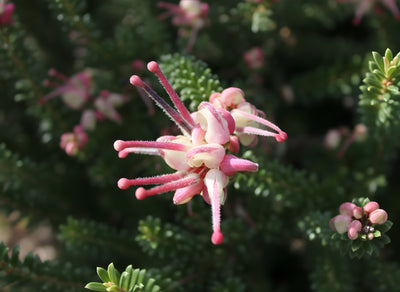
'Winter Delight' is a compact, low-spreading form of the woolly grevillea, valued for its spectacular winter-to-spring flower display of red and cream spider-type blooms that sit densely over the soft, grey-green woolly foliage. As the name suggests, it peaks in the cooler months when few other plants are in full colour, making it invaluable for year-round garden interest. Hardy, drought-tolerant and naturally compact, it suits low borders, rockeries and native garden edges in SA's temperate climate.
Key Features
- Mature Size: 0.3–0.5 m H x 1.0–1.5 m W
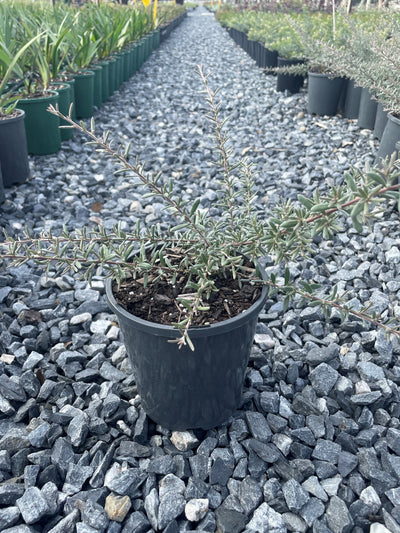
- Growth Rate: Moderate; 15–25 cm per year; low-spreading with a dense, prostrate to mounding habit
- Foliage: Small, linear, soft-textured leaves with woolly grey-green surface; attractive year-round
- Flowers: Bicolour red and cream spider-type flowers; dense display from winter through spring; non-fragrant
- Seasonal Interest: Peak flowering winter–spring; attractive woolly foliage year-round
- Wildlife Value: Excellent bird-attractant — honeyeaters forage through flower clusters; provides low shelter for small fauna
- Tolerance: Drought-tolerant once established; frost hardy (handles to −5°C); heat-tolerant; wind-tolerant; clay-tolerant if well-drained; suitable for exposed sites
- Planting Density: Low border/groundcover: 80 cm–1 m apart; rockery: 1–1.2 m apart; mass: 80 cm centres
- Pet Friendly: May cause contact dermatitis and mild digestive upset if ingested; discourage chewing
Where It Works Best
- Sunlight: Full sun to part shade; flowers best and most compactly in full sun
- Soil: Well-drained loam, sandy loam or gravelly soils; tolerates slightly alkaline; avoid phosphorus-rich fertilisers and waterlogging
- Water Needs: Establishment: 2 deep soaks/week for 8–12 weeks. Established: deep soak every 2–3 weeks in summer; rarely in winter — only if prolonged dry.
- Maintenance: Light trim after main flowering to maintain compact shape; mulch in spring; use low-phosphorus native fertiliser sparingly
- Lifespan: 15–25 years in free-draining conditions
- Climate Zones: Suited to all SA temperate zones including Adelaide Hills, inland areas, coastal second-line and metro gardens
- Soil pH: Slightly acidic to neutral (pH 5.5–7.0); tolerates slight alkalinity
Landscape & Design Ideas
- Winter-interest planting alongside Westringia and Correa for off-season colour
- Low native borders and rockery fill between larger shrubs
- Slope stabilisation and erosion control on dry banks
- Underplanting for open native canopy trees
Why You Will Love It
When the garden goes quiet in winter, 'Winter Delight' puts on its best show — masses of red and cream flowers over soft grey foliage, alive with birds, all from one of the toughest natives you can plant in SA.